Showing posts with label fun. Show all posts

Saturday, April 16, 2016

More Fun With Crab Apples

0

As it turns out, we have a very prolific crab apple tree in our front yard.  It has approximately one bazillion crab apples on it.  That creates a challenging situation for folks like us who are busy with other homesteady things, but who hate to see any produce go to waste.  So we did the only thing we could think of: we made a plan to use all bazillion crab apples.  Most of them are still out on the tree, but at least weve got a plan.  Plus, weve already filled the fridge with sauce and juice, and Katie says we have to clear that out before we pick any more.

Weve laid out our plan below, in case anyone else reading this is in a similar situation and just needs a creative nudge.  Hopefully well be able to report back over the next several weeks about successful experiments, so stay tuned!

The source.  Loaded and really hard to mow under.

The first five gallons worth.  This didnt even get one branch out of the way for mowing.  Yikes!  It turns out theyre just like regular apples, except crabbier.

The sauce-making apparatus (aka, berry grinder), in case the strange-looking device in the next graphic is hard to decipher.

...And here she is: the master plan.  Twelve ideas for what to do with all those crab apples.  We posted about jam, pie filling, and liquid pectin earlier, but were now revisiting some of those recipes with a 100% crab apple version.  Also, preliminary tests suggest chickens like crab apples at any state of processing--from completely raw all the way to the screened-out leftovers.

What do you do with your crab apples?  Let us know in the comments below!


Read more

Tuesday, April 5, 2016

More Fun With Crab Apples 2 The Sauce

0

A couple weeks ago we wrote about our plans for processing as many of our crab apples as we could before the deep freeze hit, and weve been busy experimenting ever since.  We had twelve ideas for what to do with the crab apples, which we wanted to break up into blog posts for fresh, liquid, and sauce.  (Two other ideas--put the raffinate in the compost and feed it to the chickens--are pretty self-explanatory and dont really need their own post.)  We didnt manage to get them all picked before freeze damage hit, so the fresh category will have to wait until next year.

But in the liquid and solid categories weve had some success (by our standards, at least), and so we wanted to post our results here as a baseline for other researchers to reproduce in their own labs and develop further.  First up: the solid portion! This is the sauce obtained after boiling the apples to soften, straining out the water, and passing them through a crank-style food strainer (we call it a berry grinder).

Idea #1: Applesauce.  Easy as that--eat it straight up.  Its pretty good, but tart.  We kind of settled on a ratio of 1 cup sugar to 6 cups sauce as the optimal balance of sweet and tart.  If were feeling really sassy, well add some cinnamon.

Idea #2: Crab apple butter.  We took four quarts of the sauce, added 2.5 cups sugar, and cooked it down to two quarts in the crock pot.  We also added some cinnamon and allspice (about two teaspoons each), and nutmeg (about 0.5 teaspoon).  Its thick, but easily spreads out onto lots of things.

...like this toast that just became 1000 times tastier!

Idea #3: Crab apple jam.  Kind of like our rhubarb-crab apple jam from a few weeks ago, but using only crab apples this time.  We used the liquid pectin that came from the same crab apples (of course!).  Eight cups crab apple sauce plus two cups liquid pectin equals ten cups total, which needs ten cups sugar (we used eight cups white plus two cups brown).

Looks pretty good, and it set right up! Weve got a lot of peanut butter sandwiches to eat before next summer.

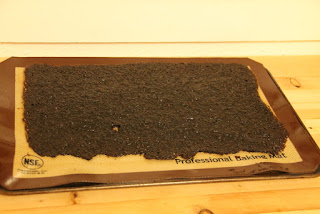
Idea #4: Fruit leather (our favorite).  Cookie sheet, silicone baking mat, and a 1/8" thick layer of crab apple sauce (still mixed with sugar in a 6:1 volume ratio).  We set the oven to its lowest temperature (150 °F for us), and it took 9-10 hours to get to the right consistency.

And when it did, it was awesome.  Best fruit leather weve ever made (although thats admittedly a small sample size).  We tore off the left side like two hungry velociraptors fighting over a roast pheasant. (Dont laugh, weve seen it happen.)  We picked a whole nother bucket of crab apples just to make more fruit leather.

Hey, look! Its a crab apple fruit roll up!  Were not professionals, but that silicone baking mat is.  We also made a batch in the dehydrator, but it took longer to dry and stuck to the tray.  It was so beat up by the time we got it free that we had to eat it immediately, just to put it out of its misery.

Idea #5 (bonus!): We also happened to find out that a pretty mean crisp can be made with the sauce (plus 6/1 sugar).  It doesnt have large apple pieces, but it does have all the other essentials of an apple crisp: tangy apple flavor in a fruity fruit layer, crispy crisp topping on top, and an irresistible attraction to vanilla ice cream.  For the topping, use a ratio of one cup each whole rolled oats and brown sugar, 0.75 cups flour, and 0.5 cup butter, almost melted.  (That amount will be good for a thin layer on a 9" x 13" pan.)  Sauce goes in the pan first, topping patted down on top, and whole shebang baked at 350 °F until crispy and delicious.  Cant go wrong!

Stay tuned for some experiments with the liquid!  In the meantime, what do you do with your crab apples?  Let us know in the comments section below!


Read more

Monday, March 28, 2016

More Fun With Crab Apples 3 The Juice

0

We continue our crab apple-themed posts (the original, part 1, and part 2 here) with some ideas for what to do with the juice part--the water the crab apples were boiled in, after straining out the apple solids.  Lets get to it!

Idea #1: Liquid pectin.  Its just the aforementioned liquid fraction. Boiling solublizes the pectin, so its essentially a hot water extraction of the crab apples.  Pretty easy!  Check if its strong enough by adding one teaspoon liquid pectin to one tablespoon high-proof alcohol (91% rubbing alcohol (isopropanol) or 95% ethanol), and waiting a minute.  If the gelatinous mass can be picked up with a fork (example in fourth photo here), its strong enough.  If not, boil the liquid pectin down some more and try again.  To use in jam, take one cup liquid pectin per four cups fruit pulp and five cups sugar.  Mix pectin and fruit pulp, bring to a boil, mix in sugar, return to full rolling boil.  Boil one minute, pour into hot, clean jars, and process in a hot water bath or pressure canner, or by whatever method you prefer.


Idea #2: Crab apple-ade.  We take the liquid, dilute it by half with water, and add a teaspoon of sugar per cup to sweeten it.  Sweet-tart and refreshing!


Idea #3: Crab apple wine.  There are a few recipes here and here, but were usually a little more cavalier about the process.  Well post more details on our home wine-making adventures in the future, but our general process is this: Measure the specific gravity of the juice (left), add enough sugar so that the yeast will make enough ethanol to kill themselves...


...add the yeast to a half cup of the sweetened juice and let it sit for a few minutes to proof...


...then put everything in a stainless steel pot with a bungee cord-secured towel to keep out fruit flies. (Or primary fermentation vessel if you want to sound legit.)  It stays here for about a week, then gets transferred to a carboy (or jug) with an airlock and left for several months while the yeast finish their magic.  When fermentation stops and the specific gravity shows sufficient alcohol to kill the yeast, we check the flavor and bottle it up! (Again, more details in a future post.)


Idea #4: Powdered pectin.  Remember the test to see if the liquid pectin solution is strong enough? Commercial powdered pectin is made by a similar process.  We tried to recreate that process on a kitchen scale.  We took one cup of the liquid pectin plus a half cup of 190 proof ethanol.  That precipitates a lot of the pectin as a gel...


...that can be filtered out of the liquid.  Dont throw away that liquid!  That would make for some very expensive pectin!  Instead, mix it with some Celestial Seasonings tea, and youll have a Colorado Iced Tea.  Whats up now, Long Island? (Note: the liquid has a very high alcohol content, so you dont need much to make a very potent drink.)


The filtered pectin gel can be collected...


...dried like fruit leather...

...baked at 150 °F until crispy, frozen, and ground with a mortar and pestle into a powdered pectin product. (In retrospect, it might be possible to skip the food dehydrator and freezing steps.) Our pectin is darker than the store-bought powdered stuff probably because we didnt do any of the washing steps that the commercial producers do before they dry and grind. This was a lot of work for a little pile of powder, but we were able to make it using only things we already had on hand.  It would also store longer and in less space than the liquid stuff, if we didnt have to use this whole batch right away to answer the critical question: does it work for jam?

 
We took some raspberries out of the freezer and made a mini-batch. (The sure-jell recipe called for one packet of pectin powder (about 0.25 cup) for 5 cups fruit and 7 cups sugar.  We ended up with about two teaspoons of our powder, so we cut the recipe to 1/6 scale.)  We also ran a control (without pectin; jar and toast on left in photo) to see if the jam would set on its own just from the sugar.  While both batches set, the one containing pectin is noticeably firmer (but still spreads easily). So, our powdered pectin made a difference! Yay!


Idea #5 (bonus!): Crab apple molasses.  In our first attempt to make powdered pectin, we tried just drying down the liquid pectin to a solid.  But instead of a light-colored substance to grind, we ended up with this dark-colored, gummy stuff.  So we tasted it.  Its good!  A lot like molasses, but with an apple flavor.  Time to make some crab apple molasses cookies!

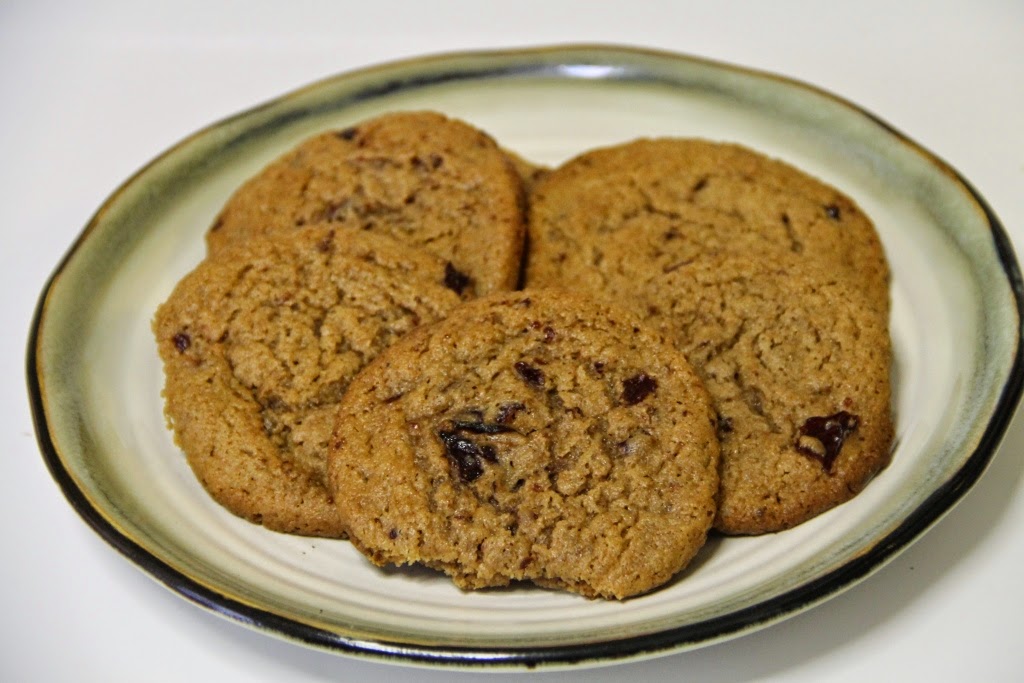
We took our favorite molasses cookie recipe (thanks, Grandma!) and swapped regular molasses for crab apple molasses straight up. A couple things we found out: our crab apple molasses is a lot harder than regular molasses, and doesnt mix with the cookie dough very well.  We heated it up, and that helped some, but there were still chunks.  Thats why it looks like we made craisin cookies in the photo.  In fact, Katie thought they were craisins at first! The chunks are chewy and sweet-tart, so it really is hard to tell a difference.  So far, 100% of household correspondents have concluded that the cookies are tasty.


What do you do with your crab apples?  Let us know in the comments section below!


Read more

Friday, March 25, 2016

More Fun With Dandies How to Pull the Petals

0

If youve been following this blog for any amount of time, you might have noticed that weve slowed down quite a bit with our posting schedule.  Its not for lack of things to post about, of that you can be sure.  Its mainly because weve got so much going on that we havent had a chance to sit down and write about all the fun weve been having!  Last week, our homestead population increased from 2 to 7,027 due to the arrival of a package of honey bees and 25 chickens.  (At this rate, well have to annex the neighbors yards by June!)  Weve also had significantly increased off-the-homestead responsibilities since the end of March.  But above all, the primary reason weve been so slow in posting is that weve been trying to use every dandelion flower in our yard. (We havent even come close, but maybe next year.)

In the course of making use of all these dandies, weve improved our technique for pulling the petals out of the flowers, so we wanted to do a quick post to let everyone know about our new technique, in case someone else might want to get out and try it before the dandelion production drops off this spring.

This is the part of the yard where they have to share with grass and other flowers.  Other parts they have all to themselves.  Clearly, if were going to get them all, weve got to move quickly. 

Most sources on collecting the flowers agree up to this point: keep just the flower head.

This is where our new technique diverges.  While others say to dig out the petals with your thumbnail, weve found its quicker and easier to split the flower head in half, but not go all the way through, like so.

Then we take the pad of our thumb and rub the petals from one half from the split outward.  Almost all should come at once, if not, the stragglers are easier to grab with the flower split open.  Sometimes a few of the green parts on the back side will break off also, but for the most part, its not a problem if they come along.  At the end of the day, weve usually got about 99% petals and 1% green stuff in the bowl.

Repeat with the other side, and were done!  After a while, we get in the zone and can run at about five seconds per flower, except for the most stubborn specimens.  Its close to the same time frame for processing strawberries or green beans or the like.  Also, weve noticed that from about four cups of flower heads, well end up with about three-and-a-half cups of petals if they dont get too packed down.

With the petals, you can make all kinds of stuff, like wine and jelly!  While the petals themselves dont have a lot of flavor, they definitely add something besides yellow color to the end product.  Its just the right amount of je ne sais quoi...

The jelly looks especially nice when sitting on a matching honey bee-themed hand towel and catching the afternoon sun through a washroom window.  Also, since we know youre wondering: yes, it goes great with peanut butter in a sandwich.


The wine is still going, so we probably shouldnt post a recipe until its done and we know its good, but heres the recipe for the jelly, based in part off of Kristinas recipe here:

4 cups dandelion petals
8 cups water

Boil the water and petals for ten minutes, strain out petals (we used an old t-shirt) to give a nice yellow dandelion petal tea.

4 cups of the dandelion petal "tea"
0.25 cups lemon juice
2 cups sugar
4 teaspoons Pomonas pectin + 4 teaspoons calcium water (from powdered CaCl2 included in the pectin box)

Mix the sugar and pectin together well.  Mix "tea," lemon juice, and calcium water together, and bring to a boil.  Add sugar/pectin mix, stir vigorously to dissolve, bring to full rolling boil, keeping a close eye on the stove so the pot doesnt boil over and make a thick layer of dandelion fruit roll-up in the nether regions of your stove.  (Not that that would ever happen.)  Remove from heat.  Pour into clean canning jars and process according to preferred instructions. (We normally use the inversion method of turning the full jar upside down for 5-10 minutes, then flipping back upright, but food safety experts recommend at least a boiling water bath for a reliable seal.  General instructions are here; to apply to this recipe, replace every instance of chokecherry juice with dandelion petal tea.)


What are you using dandelion flowers for this spring?  Have you managed to pick all of the dandies in your yard? (Dont forget, today is mothers day, and mothers love flowers!)

Read more

Wednesday, March 23, 2016

Fun with Green Tomatoes

0

In years past, weve covered our tomato plants with tarps through the first frosts of the fall, and eventually brought them inside to let them ripen up through Thanksgiving or so.  But some never ripen, eventually shriveling up into tomato raisins.  Others go bad.  And even the ones that do ripen seem to lack the pizzazz that fresh summer tomatoes have.  And this year, we planted a lot more tomatoes than in years past, so there would have been sacrifices of counter or garage space.  Most importantly, however, when we started experimenting with green tomato recipes last fall, we realized that we were only brushing the surface of our green tomatoes potential

It was a perfect storm such that when frost threatened in mid-October this year, we gleefully picked all the tomatoes and got to work processing them right away, ripe or not.  Heres what we tried this year.

This bowl is just the Romas! Its about 15 lb. worth.  The green Black Krims, Mr. Stripeys, and volunteers made up about another 7 lb.

As we did last year, we didnt scrimp on the salsa making.  The batches all come out pretty good, but we havent found a home-run recipe yet.  When we do, well for sure post it on here.  Our favorite uses for the salsas new this fall: nachos (of course), corn bread (both for part of the recipe and on top), and eating straight-up for sinus clearing.  Katie requires any homemade creations with more than about 2,000 Scoville units to be labeled as hot.  As a point of reference, all of the red color in the right-hand jar comes from cayenne peppers.  That kind of heat will keep you feeling warm and fuzzy inside all day!

We also made a green tomato jam (with vanilla and ginger), mainly following this recipe, but chopping everything with a stick blender in the pot, and ignoring the advice to remove the tomato seeds.  Its pretty good, but we feel like the long cooking time lets the ginger and vanilla flavors (especially the vanilla) start to dissipate.  Next year, well probably add some pectin and make it like regular jam.  The site we got the recipe from says its good on plain yogurt, which it is, and its also good on a sandwich with peanut butter (the way jam is meant to be enjoyed!).  Katie says the ginger flavor is a a little strong for her tastes, so you might want to cut back on that if youre somewhat ginger-averse.

The jam recipe also makes a pretty mean fruit leather.  Its got a molasses-type flavor, but the ginger still comes through strong enough to deter Katie.  (But she says shes not a bigot, and that some of her best friends are gingers.)

And last, but not least, mince filling!  We had never had a mincemeat pie before, but will definitely make it again.  We followed this recipe for the most part.  On its own, the filling kind of tastes like a spicy apple butter.  When mixed with an oat-and-almond crust, it tastes kind of like a Fig Newton. 

All told, those green tomatoes contributed to 14 pints worth of food, not including the test samples taken above.  Pretty good!

What do you do with your green tomatoes?

Read more

 
Powered by Blogger