Showing posts with label manitoba. Show all posts

Sunday, April 10, 2016

Aquaculture in Manitoba Where to Start

0

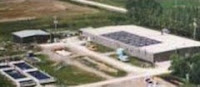
picture of land based fish farm in manitoba
My First Fish Farm in Manitoba
I often receive requests for information on Aquaculture in Manitoba. Many requests are from persons wanting to research the business potential of fish farming as an alternative or supplementary form of agriculture or as a standalone business. The following provides a quick overview of Aquaculture in Manitoba with links to further resources.

Aquaculture, or fish farming, has been practiced in Manitoba since the late 1960s. It began with experimental stocking and fish growth studies in “pothole” lakes in the Erickson area in southwestern Manitoba. These pothole stockings were conducted by the DFO Canada Freshwater Institute and the Manitoba Government. Many of these lakes were considered to have the potential to be productive waters for raising fish and experimental stocking and monitoring was undertaken to help determine fish performance. Rainbow trout quickly became the species of choice due to their rapid rate of growth and their general hardiness. Rainbow trout continue to be the primary species stocked into lakes and dugouts in Manitoba.

Manitoba fish farming activities have primarily taken the form of hobby farming, involving the stocking of fingerling sized young fish into farm dugouts or ponds on private lands, or into small lakes on Crown lands, primarily for recreational purposes. The stock is generally allowed to grow by foraging on available food sources within the pond. This practice is known as Extensive Aquaculture. Depending on the owner preference, pond environment and fish growth desires the food source is sometimes supplemented by the feeding of prepared commercial fish food.

A good source of information on this type of activity is a booklet “Trout Farming in Manitoba”, available from the Fisheries Branch of the Manitoba Department of Water Stewardship.

Intensive aquaculture, which takes the form of fish rearing in cages, tanks, or raceways, is relatively new in Manitoba. There are currently only a few commercial aquaculture operations in the province. However interest in commercial aquaculture as a means of agriculture diversification or as an alternative crop is increasing.

Intensive aquaculture requires a higher degree of rearing environmental control, increased fish stocking densities, controlled feeding rates with prepared nutrient dense diets and greater farm management requirements. Intensive aquaculture operations require more capital investment , involves the use of more technologies and equipment and necessitate increased levels of manpower .

As mentioned extensive aquaculture is carried out in lakes or dugouts, present and future intensive aquaculture operations in Manitoba will involve the growing fish inside buildings under controlled conditions using tanks of varied sizes and shapes (land-based), or in cages moored in deep lakes.

The province of Manitoba offers “A Guide to Intensive aquaculture in Manitoba” as a good starting point for those exploring commercial fish farming in the province.

I always advise people to research the potential of Aquaculture as a business in as much detail as they can before deciding if its an opportunity that fits both your financial and location resources.

Aquaculture does offer good potential for financial returns and it can be a rewarding business and one you can be be proud of. Like any other idea, your business size and scope has to suit you and your resources to have the best chance for success.

More information on commercial land based Aquaculture can also be found at This link.

Information on Aquaponics farming, an excellent way to grow your own supply of fresh herbs, vegetables and fish year round can now be found at This Page.

Update: A Canadian model aqua-farm demonstrating the viability of indoor fish rearing on the Prairies is now producing Rainbow Trout. The farm is a research data collection site to answer the many questions would-be investors and regulatory agencies will have about fish-farm operations. Link to AGcanada.com Story

B&B Freshwater Fish Farm owned by the McDonald family and located near Gunton Manitoba, is expanding. Rick McDonald converted an unused hog barn to fish farming. They now raise Arctic Char and maintain one of the few certified disease free breeding stocks in the world today. They produce Arctic Char eggs and young fish plus some Rainbow Trout Read More Here.

Read more

Wednesday, April 6, 2016

Manitoba increases biodiesel tax incentive

0

From Farm Credit Canada AgriSuccess Express news letter
by Kevin Hursh


In its 2006 budget, Manitoba has eliminated all provincial taxes on pure biodiesel produced within the province. This more than doubles the provinces tax incentive to spur biodiesel production.

The province is no longer collecting the road tax and provincial sales tax on pure biodiesel that meets the American Society for Testing and Materials fuel quality standard. Manitoba says the incentive will remain in place for five years to give the industry time to grow.

The removal of the taxes provides an 11.5 cents per litre advantage over regular diesel and is in addition to the four cents per litre tax break offered by the federal government. The tax advantage applies to the biofuel portion of biodiesel blends.

As part of its biodiesel action plan, Manitoba is working on the establishment of a biodiesel fuel quality testing centre. As well, it is studying the feasibility of using specified risk materials (the components of livestock remains that are restricted due to BSE) for the production of biodiesel.

Biodiesel is made from vegetable oils (canola oil is preferred due to its superior cold flow properties), as well as animal fats and/or waste restaurant grease.

There are currently two pre-commercial biodiesel production facilities in Manitoba – Bifrost Bio-Blends in Arborg and Celtic Power in Rapid City.
Source Link Here

This is good news. It isnt directly aquaculture related, it is however an important step in support of sustainable farming and resource developments. It will be a hugh step for agriculture if someday we do see biodiesel made from using specified risk materials

Read more

Saturday, March 26, 2016

Manitoba and Aquaculture

0

It is my humble opinion that the practice of aquaculture in Manitoba is still regarded as a fishing industry sector. This needs to be undone.

Aquaculture isn’t a term that should be misunderstood, yet it is. The Aquaculture Industry isn’t a flash in the pan, limited cycle, and limited opportunity hair brained make money fast scheme. It is a very productive fast growing sector of agriculture that has accomplished nothing more or nothing less than any other form of agriculture; it has delivered wholesome food to a world faced with crisis after crisis of diminishing sources of nutrition.

Somehow the general opinion and view of the Aquaculture industry in Manitoba is that it is a practice undertaken by some half crazed folks that have nothing better to do than invent some other agriculture opportunity, in an effort to cash in on the rush and to gain a foothold and be the first.

Such thinking makes it difficult; to an almost extreme, for a good number of well read individuals that study trends and decide to risk money and hard work in hopes of to a commercial scale alternative crop farm, to even consider banking on an aquaculture business in the Manitoba. They simply don’t.

I am very much educated on the history of aquaculture ventures within Manitoba and elsewhere. There have been many “firsts” in this province that were research based but have now gone by the wayside; this is disappointing to a fish farmer such as me and perhaps to numerous other similar people.

Over the years of promoting aquaculture in Manitoba I have realized that there have been numerous instances where enterprising persons have attempted to create both large and small scale aquaculture operations using family money, borrowed money or investor money, only to have one thing in common, a complete lack of any support structure and their farms can only gain agriculture farm status if grow some plants, bale some hay or work a few cows on the side, otherwise they had none of the protection measures offered by the province.
Their fish farming investments of time and money were not considered farming. It still isn’t today.

Any person that has stepped up to the plate and wished to start a new agriculture operation with fish as the principal product, has or well, at some point find themselves going without traditionally accepted support programs such as crop insurance. There are extreme comparisons that could also be made, such as Aqua farmers not having recognition under any farming act, including the Farm Protection Act.

To me this is a very unfortunate situation. A quick Google search and a resulting view of all the topics good or bad, will lead you to believe Aquaculture is Agriculture and the food needs of the world have to be addressed by some means of human intervention including fish farming that has been practiced for over 3000 years in China. Fish farming like any other activity that humans have created was intended to increase the food supply, along the way it has had its share of controversy, mistakes that were made in the creation of the “modern” industry that are now addressed and dealt with by increased ability to design better farming systems.

Aquaculture is a worldwide industry worth over several billion dollars each year. It is now fast becoming an industry where company managers have to make educated decisions while attempting to adhere to a plan that drives the need to adopt new technologies in order to ensure an improvement in the environmental footprints of fish farms.

On a world wide scale the industry has leaned to grow and adopt protection and farming measures that were created in a rapid sense and at a speed that excels that of any other agriculture operation in history. This gives or should give the industry, a status, of being a valuable agriculture group or at the very least the status of being an adaptable group of farmers if not even a cooperative group.

Changes made by incorporating better security and minimizing potential impacts to the environment are a large part of new generation fish farms. I am glad that such efforts have resulted in marked difference in operation performance and compliance and have greatly enhanced the industry. Yet there is no realization that such achievements have been made here in Manitoba, it remains a political environment that still struggles with 1972 advancements in hog farming.
Neglecting an entire proven food production industry in the bargain, to say nothing of ignoring advances achieved in sustainable production of food, by continuing to use antedated regulatory measures.

The new world fish farm is one that has a focus on new methods that can lead to the creation of almost zero impact farms. These, as David Suzuki has to say, are land based farms with every means of control.

Manitoba has locations that can fit the new criteria and can exceed the requirements of any consumer review and also gain acceptance from the entire world.
Yet our Manitoba industry cannot achieve the support of government even having after getting the nod from most environmental groups.

I ask you, should a farmer wishing to build a tested and proven farm have to suffer the inadequacies of any government department that at first does not recognize him/ her as a farmer and also goes on to ensure that there is nothing by way of support or value to foster his/her dreams of achieving family driven diversification on the farm.

So where are we? We have the ability to grow a significant amount of fish using disease free farms that require no chemical intervention to maintain stock health, we are positioned in a high level trade area that allows us the opportunity to service markets daily, we can negate any possibility of fish escapement because we are land based, we can volunteer to help restore wild fish stocks using our assets, we can offer the world an alternative to controversial supplies of fish. All of these are on the plus side of the ledger
Yet we have no industry support in Manitoba. That is the biggest negative.

Read more

 
Powered by Blogger