Showing posts with label of. Show all posts

Wednesday, June 1, 2016

Family Promise Founder to Speak at Grand Opening of New Day Center in Albuquerque

0

Karen Olson, the founder of Family Promise, is the featured speaker at the grand opening of the new home for the organizations Albuquerque affiliate on Sunday, November 1, 2015, at  3:00 p.m. You are invited to come hear her amazing story and to celebrate Family Promise of Albuquerques new space and expansion at 808 Edith Blvd NE (map).  For more information, call 505-268-0331.

Below is a speech that Ms. Olson gave at the  University of Arkansas Clinton School of Service in May of 2011. 

Read more

The Science and Engineering of Smores

0

We realize this post is a few days too late for the first major camping weekend of the summer, but the truth is, we needed a tune-up on our smores theory and practice ourselves.  So now, while the extensive refresher training we completed over the last few days is still at the front of our minds, we wanted to put out a short treatise on the intricacies and nuances of marshmallow roasting and smore eating.

The first step in creating a smore is to initiate the thermal oxidation of some woody biomass.  To avoid marshmallow ignition, we want radiant heat from the coals rather than heat from the gas-phase oxidation occurring in flames. That requires full primary combustion of the wood, which takes a considerable amount of time.

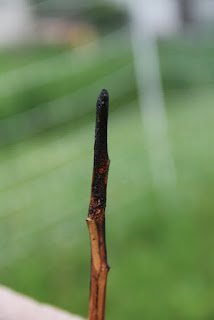
The second step is to select a marshmallow roasting device from a nearby tree or shrub, taking care to avoid the species Toxicodendron vernix.  The geometric outlay of the device is to some degree a matter of personal preference, but weve found that a half inch diameter at the base tapering to approximately a quarter inch at the business end, and 2.5-3 feet long, to be optimal for most common campfire heat intensities and standard-size marshmallows.

Similarly, the optimal linearity of the device is a subjective matter.  Some prefer a higher degree of linearity to facilitate a uniform axial rotation during roasting. Others prefer some curviness to allow the roaster to reach preferred roasting locales within the campfire from any position around the fire ring, including those toward which the smoke is not traveling, and independent of other smore engineers who may be occupying prime roasting real estate.

Nearly all experts agree, however, on the advantage of a barbed tip to prevent marshmallow disengagement from the device during the later stages of roasting, when the rigidity of the melty marshmallow core has deceased significantly.  Similarly, there is nearly universal agreement that removal of the bark from the tip of the device prevents inadvertent transfer of bark particles to the marshmallow.

In theory, pure radiative heat from glowing embers produces the most satisfactory roasting experience.  However, in practice, maintaining sufficient heat flow from a bed of embers over the course of tens of minutes that comprise a typical roasting session is challenging (as is having the patience to wait for the wood to finish burning down to coals).  Thus, the optimal sustained roasting environment often requires a combination of actively burning wood and pockets of glowing embers.

With the marshmallow applied to the roasting device, and roasting commenced over an appropriate heat source, the sugars in the outer shell of the marshmallow will begin to caramelize.  The primary chemical challenge during roasting is to uniformly caramelize the entire shell without charring or igniting any part of it.  The preferred technique among experts is a slow, rotisserie-style rotation at 4-6" from the embers, though few possess the patience to functionally sustain such an activity for the duration of the roasting operation. Another challenge is roasting the surface closest to the base end of the roasting device.  There may be some advantage to loading the marshmallow onto the device axially to minimize the surface area facing the base end (since the flat side of the marshmallow is smaller than the curved section), and then lightly smooshing the marshmallow to convert some of the base-facing surface into side-facing surface.

When the marshmallow is satisfactorily caramelized, it can be assembled into a smore, with graham crackers and chocolate as co-ingredients.  In some circles, a preferred embodiment of the smore is one which can be eaten cleanly (i.e., without loss of melted marshmallow to the eaters face or hand, or to the ground).  In such an embodiment, the chocolate and graham must be of the correct pliability, such that biting into the smore results in neither excessive compression of the marshmallow nor shattering of the graham cracker components.  The desired pliability can be achieved by mild heating of the graham and chocolate for 4-5 minutes while roasting the marshmallow (resulting in a final temperature of 100 - 105 °F).  More intensive heating melts the chocolate and toasts the graham, effectively exacerbating the problem.

A proper grip on the smore can also help keep the smore intact while biting.  As this hand model is demonstrating, a firm grip in one quadrant of the graham, using the end section of the first two fingers and the thumb, is optimal for minimizing transfer of marshmallow to the hand while maximizing the exposed area on which to apply the bite.  Large bites, up to the size of the entire smore, also minimize brittle fracture of the graham into the hand.

After roasting one- or two dozen marshmallows, the roasting device can be saved for future use, but a bit of maintenance and cleaning will help preserve its integrity and avoid attracting ants.  A first step in cleaning is commonly to remove as much marshmallow residue as possible by mouth.

Particularly recalcitrant residue can be removed by charring the tip, followed by wiping with an appropriate material, such as a t-shirt or nearby grass.  The health benefits of any residual char that may be transferred to future marshmallows are unclear, but related products are highly valued in some types of cuisine (an explanation of the scientific function of biochar in the digestive tract can be found near minute 19 in the video accompanying the previous link, although the entire episode provides a much more compelling narrative if one is amused by the non-sequitor nature of Japanese cartoons).  The roasting device can be stored somewhere relatively clean and out of the fire pit until needed again.

In conclusion, many factors must be considered to produce an optimally roasted marshmallow and a satisfactorily engineered smore.  We hope this primer has helped elucidate some of those factors, but we welcome additions and suggestions to incorporate into the second edition of this text.

What is your preferred marshmallow-roasting protocol?


Read more

Tuesday, May 31, 2016

Impressive Group of Speakers to Address End Hunger Summit

0

Krista Kelley, is seen as a visionary in the design and implementation of numerous projects that have changed the course of New Mexico communities through hunger, healthcare, employment and access to vital services... Albuquerque kindergarten teacher Sonya Romero has gained international recognition for her generosity toward students at Lew Wallace Elementary School....Since 1984, Pastor John Hill has served his fellow man in the non-profit sector, focusing on individuals coming directly out of the prison system, with drug and alcohol addictions, or with employment challenges...Rev. Jack Bunting is currently serving as the President/CEO of the St. Felix Pantry, Inc. in Rio Rancho, and continues to be passionate about serving the needs of the poor, hungry and hurting within Sandoval County and the State of New Mexico...Sherry Hooper took over as executive director for The Food Depot, Northern New Mexico’s food bank in September, 2001. Ms. Hooper co-founded the Santa Fe Food Policy Council and served on the Council as a City of Santa Fe appointee for four years...Crystal Fitzsimmons leads FRAC’s work to increase participation the federal school, summer, and afterschool nutrition programs. She analyzes policy to advocate for legislative and regulatory... improvements to increase low - income children’s access to the nutrition programs...Veronica Garcia became New Mexico Voices for Children’s executive director in 2012... As New Mexico’s first Cabinet Secretary of Education, she pushed for funding for programs such as school - based health clinics, breakfast in the schools, and elementary physical education.
The Second Annual End Hunger in New Mexico Summit, scheduled for Sept. 23-24, will feature an impressive group of keynote speakers. [Archbishop John Wester of the Archdiocese of Santa Fe was originally scheduled to address the event, but something came up (Pope Francis visit to the U.S.!)]. The Albuquerque Marriott, 2101 Louisiana Blvd. (map), will be the site of the summit. Two of the keynote speakers lead organizations that have endorsed the Interfaith Hunger Coalition (IHC): Adelante/The Storehouse and New Mexico Voices for Children. The IHC will have a display at the summit and will also be presenting a workshop on Wednesday, September  23, !;45-2:45 p.m. in the Acoma Room. Here is a description of our workshop

Faith In Action: An Introduction to the Interfaith Hunger Coalition
* Ellen Buelow, Interfaith Hunger Coalition
Our interactive workshop introduces participants to the vision and activities of the Interfaith Hunger Coalition focused in three areas; education, advocacy and direct action. Here’s an opportunity for faith communities to collaborate in a common place. Explore how you and your organization can join forces without duplication of services.

Check out the full schedule of events, including descriptions of all the workshops and more information about the keynote speakers. You can register on site at the summit on September 22-24. The registration fee is $20. Participants are encouraged to bring non-perishable food items, which Desert Harvest will distribute to feeding sites in Albuquerque.

Read more

Monday, May 30, 2016

A Different Kind of Weed Brownie

0

Last April, we said that it wasnt really spring until we had had our dandelion fix, which is an assertion we still stand by.  But what happens when we havent fully scratched our itch, but Katie is tired of eating dandelion pancakes (or possibly just pancakes in general), and the dandelions are still blooming?  Weve got to figure out other foods to put dandelions in.

Weve been intrigued (and impressed) by desserts that feature vegetables: carrot cake (obviously), red velvet cake with beets, frosting colored with spinach or beets, and Katie even makes a pretty mean zucchini brownie.

So we thought, "Hey!  It seems like we can take a recipe for some kind of cake-type thing, add a bunch of shredded veggies (which would also be a good name for a band), and have a dessert for which its easier to justify eating four or five pieces at once!"  Also, it was April 20 last week here in Colorado, which seemed to carry some sort of significance that we cant quite put our finger on...and so the concept of the dandelion brownie was born.

We started with about 3.5 cups of dandelion flowers, which gave us about 3 cups of petals

Then we started making a regular brownie recipe.

We added the dandelion petals at the same time as the flour and chocolate chips, but the batter was really dry so we also added a half cup of milk.

The milk brought the batter back to the right consistency, despite all the extra nutrition (also here) we packed in.

We spread the batter out into a greased pan...

And baked it!
Since the petals are so mildly-flavored, they hardly affect the rich chocolatey taste at all. The brownies taste just like brownies, but the petals are visible as little yellow streaks.  Theyre like little pieces of confetti for celebrating healthy desserts!

The recipe (based off brownies from Glorious Treats):
4 eggs
1.25 cups unsweetened cocoa powder
1 teaspoon salt
1 teaspoon baking powder
1 Tablespoon vanilla extract
1 cup butter
2.25 cups sugar
1.5 cups all purpose flour
1.5 cups (one 12-oz bag) semisweet chocolate chips
3 cups dandelion petals
0.5 cup milk

Beat together eggs and cocoa.  Melt butter, mix in salt, sugar, vanilla, and baking powder, then mix together with eggs and cocoa mix.  Add flour, chocolate chips, dandelion petals, and milk, mix well.  Smooth batter out into a 10" x 16" cookie sheet, and bake at 350 °F for 25 minutes, or until toothpick inserted into center comes out clean.


What types of vegetables do you put into your desserts?  What other dishes do you put dandelions in?  Let us know in the comments section below!


Read more

Bishop Oscar Cantú of Las Cruces Summarizes Pope Francis Visit to the U S

0

In a piece published in the U.S. Conference of Catholic Bishops Blog "To Go Forth," Bishop Oscar Cantú of Las Cruces summarized Pope Francis visit to the United States on Sept. 24-27. Bishop Cantú wrote the piece in his capacity as chair of the USCCBs Committee on International Justice and Peace. 

Here are  the themes that Bishop Cantú summarized in his post:

Poverty 
(To the U.S. Congress) “How much has been done in these first years of the third millennium to raise people out of extreme poverty!”...“Now is the time for…combating poverty, restoring dignity to the excluded, and at the same time protecting nature.”

(To the U.N. General Assembly)“To enable … real men and women to escape from extreme poverty, we must allow them to be dignified agents of their own destiny.”....Developing nations should not be “subjected to oppressive lending systems which … generate greater poverty, exclusion, and dependence.”

Immigration
(To the U.S. Congress): We, the people of this continent, are not fearful of foreigners, because most of us were once foreigners.”...“Our world is facing a refugee crisis of a magnitude not seen since the Second World War.”...Immigrants “travel north in search of a better life…for their loved ones. Is this not what we want for our own children?”

The Environment
(To the U.S. Congress):“I call for a courageous and responsible effort to ‘redirect our steps’, and to avert the most serious effects of the environmental deterioration caused by human activity."...“I am convinced that we can make a difference and I have no doubt that the United States – and this Congress – have an important role to play.”

(To the U.N. General Assembly): "A right of the environment’ does exist … because we human beings are part of the environment.”...“Any harm done to the environment … is harm done to humanity.”...“The poorest are those who suffer most … and suffer unjustly from the abuse of the environment.”...“The ecological crisis, and the large-scale destruction of biodiversity, can threaten the very existence of the human species.”...“I am … confident that the Paris Conference on climatic change will secure fundamental and effective agreements.”

Peace

(To the U.S. Congress):Why are deadly weapons being sold to those who plan to inflict untold suffering…? [S]imply for money: money that is drenched in blood….”“[I]t is our duty … to stop the arms trade.”

 (To the U.N. General Assembly):“There is urgent need to work for a world free of nuclear weapons….”He affirmed the P5+1 Agreement with Iran as “proof of the potential of political good will and of law, exercised with sincerity….”[S]top and … prevent further systematic violence against ethnic and religious minorities’ and … protect innocent peoples.”...End “social and economic exclusion, with its baneful consequences: human trafficking, the marketing of human organs and tissues, the sexual exploitation…, slave labour, including prostitution, the drug and weapons trade, terrorism, and international organized crime.”...

In Summary
"In his speech to Congress, Pope Francis lifted up the Golden Rule. “Do unto others as you would have them do unto you” (Mt 7:12)," said Bishop Cantú. "He noted that “[t]his Rule points us in a clear direction. Let us treat others with the same passion and compassion with which we want to be treated. Let us seek for others the same possibilities which we seek for ourselves. … In a word, if we want security, let us give security; if we want life, let us give life; if we want opportunities, let us provide opportunities. … The Golden Rule also reminds us of our responsibility to protect and defend human life at every stage of its development.: In many ways, the Golden Rule sums up his approach to foreign policy and global concerns. “Do unto others.…”

Here are the texts of  Pope Francis full speeches to Congress and the U.N. General Assembly

The USCCB site has links to several other speeches or homilies by Pope Francis in the U.S., including the one at Curran-Fromhold Penitentiary in Philadelphia. "I am here as a pastor, but above all as a brother, to share your situation and to make it my own. I have come so that we can pray together and offer our God everything that causes us pain, but also everything that gives us hope, so that we can receive from him the power of the resurrection," the pontiff told the audience at the Philadelphia penitentiary.

Here is a video of his interaction with prisoners at the facility. 

Read more

Sunday, May 29, 2016

Fourth Sunday of Advent Angels We Have Heard on High

0

Angels we have heard on high
Sweetly singing oer the plains,
And the mountains in reply
Echoing their joyous strains.
Gloria in excelsis Deo.


In a #sharethegift video, The Piano Guys, Peter Hollens, David Archuleta, and The Mormon Tabernacle Choir get together to sing "Angels We Have Heard On High"

Read more

Friday, May 27, 2016

An Unfortunate Choice of Words for the Local Holiday Food Drive

0

At the risk of being called a "Debbie Downer" during this time of giving, I feel I must add my two cents to the otherwise noble effort by a group of businesses to partner with Roadrunner Food to collect non-perishable food items during the holidays.

The image on the left is a scan of the paper bag that was inserted in between the various sections of The Albuquerque Journal  this week. The paper bag presented a misleading message to the public:"Solve Hunger" by donating food. A better word would be "Help Alleviate Hunger."

To actually solve hunger, we must solve some of the structural problems that cause hunger, one of which is poverty and related factors like unemployment, underemployment, low wages, lack of access to affordable and nutritious food, a high level of debt and other causes. There are 50 million of our neighbors who do not know where their next meal is coming from, including 360,000 in New Mexico who are at risk of hunger.

"Despite the end of the Great Recession and a falling unemployment rate, the nation continues to be plagued by a very uneven recovery; low employment rates; stagnant wages; inadequate public investments; and inadequate public safety net programs. Yes, there has been progress. But it has been too slow," the Food Research and Action Center (FRAC) said in its recently unveiled Plan of Action to End Hunger in America.

And how much difference does the food drive make?  It certainly helps increase the amount of food available to Roadrunner Food Bank and all the Feeding America affiliates around that country. That is an important reason why we all should participate in this holiday drive. Go to your local grocery store (instead of emptying your pantry) and buy $10 or $15 worth of non-perishable food items and leave them by your mail box on Saturday. Or better yet, take them directly to your nearest post office.

"More than half the households in New Mexico have to make really tough decisions every day," said an editorial in todays edition of The Albuquerque Journal, one of the sponsors of the food drive.  "Sixty-one percent choose between spending on food and utilities. Sixty-six percent between food and transportation. Fifty-nine percent between food and medical care. Forty-eight percent between food and housing. But there’s an easy choice more fortunate New Mexicans can make today and Saturday. That’s to fill the brown grocery bag in Thursday’s Journal with nonperishable food,"

The brown paper bag also contains some handy tips to help Roadrunner Food Bank, including signing up for programs where retailers donate a portion of your holiday purchases to our local food bank. And you are also given an opportunity to text a donation.  Here is why the financial donations are important.

"Feeding America, the nation’s largest hunger relief organization, annually serves 46.5 million people across the U.S. through its network of 200 food banks, according to its "Hunger in America 2014" study," said an article The Huffington Post. "But what you may not know is that these organizations have limited resources themselves. While approximately 100 million pounds of food is donated to Feeding America food banks each year via canned food drives, these items alone won’t solve the issue of hunger that so many Americans face. Tight budgets, limited volunteers, finite donations, and the short turnarounds required between receiving fresh foods and distributing them to families in need can be challenges in addressing the issue of hunger – and doing so with nutrient-rich foods."

The holiday food drive should give us at least a small opportunity to show solidarity with those who receive the food. One way to do this is to be aware of the reasons why families are in their current predicament.  It doesnt help when the campaign tells us that we are actually solving hunger through our holiday donations.

Read more

Thursday, May 26, 2016

Types of Aquaculture Technologies

0

There are many types of systems and farm designs used to grow fish. These include; ponds, net cages in lakes or oceans, rectangle raceway tanks, circular (round) tanks, earthen tanks lined with plastics or clays and other forms of containment. Basic Land based fish farms involve the use of one or more types of tanks or ponds and generally have water piped in and out to maintain life support for the fish and to flush the tanks of waste products. Basic designs may also include mechanical aeration equipment for adding oxygen to water.

In recent years land based farms have advanced in technology to become more eco-friendly and to provide greater security and control of the farming process. The most advanced of these are known as water recirculation systems or RAS designs. Advancements in design and technology are being driven in part by the need to develop alternative methods for aquaculture and by the demand for more fish and secure supplies.

Read more here

We are in the process on migrating North Aqua Farms website to this site. Please bear with us while we improve and recover from our website problems. Thanks!

4,000 Pounds of Organic Vegetables Per Month, With 1/10th The Space

Read more

A Prayer for Justice at the Roundhouse Rotunda Ahead of the 2016 Session of the State Legislature

0


2016
Witness for the People
Our State of the State Address
Monday, January 18   1:30 PM

"Where there is no vision, the people perish."  Proverbs 29.18

Featuring the
New Mexico Peace Choir, directed by Christy Conduff, in the Rotunda of the Roundhouse
following the Martin Luther King Day Celebration sponsored by the Santa Fe NAACP

As our state legislature prepares to shape a new budget during this 30 day session
Let Our Voices Be Heard proclaiming the priorities for their work on behalf of the people of New Mexico.  

For more information, contact Rev. Holly Beaumont, (hbeaumont@iwj.org)

Here are a couple of videos from the 2015 commemoration, which featured the Rev. Dr. James Forbes, Senior Minister Emeritus of The Riverside Church in New York City, and President of the Healing of the Nations Foundation.


Rev. Bert Scott, representing the Interfaith Hunger Coalition, was one of several faith leaders to offer a reflection/prayer.

Read more

Wednesday, May 25, 2016

Wood Ash Leavening Chemistry An Extraction of Historical Accounts

0

Leigh over at 5 Acres and a Dream recently did a fascinating series of blog posts on producing leavening from wood ashes (Part 1, Part 2, and Part 3).  The high-level overview is that wood ashes contain potassium carbonate, which can be extracted and used as leavening for quick breads, biscuits, etc., similar to how baking soda is used.

Leigh made some pretty tasty-and-leavened-looking biscuits with her extracted carbonate (and with straight wood ash), but noted that they didnt rise quite as well as the control biscuit (which had baking soda).  There were also a few unanswered questions on the chemistry involved, so we wanted to follow our nerdy instincts and dive into the nitty gritty of whats happening at the molecular level.

First issue: what is actually being extracted from the wood ashes?  Carbonates, we suspect, but is that it?  In our minds, theres a controversy, since the process of extracting carbonates for leavening sounds an awful lot like the process of extracting lye (potassium hydroxide, KOH, in this case) for soap making.  Were especially keen on figuring this out because if both hydroxides and carbonates are present, it will change our biscuit recipe (specifically, well have to add more acid to get the leavening effect). Lets compare some descriptions.

 The very cool Caveman Chemistry website says that the major components of wood ashes are potassium and sodium carbonates, but says this of the extract:
"It contains all of the soluble materials which were present in the the ashes to begin with. This could include sodium and potassium chlorides, sulfates, hydroxides, and carbonates."
So, it sounds like both carbonates and hydroxides could be present.  Another account of potash and pearlash production from 1866 is generally consistent with that (despite a distinct lack of cavemen in 19th century North America), but doesnt mention hydroxides:

"Carbonate of potash is generally obtained from wood ashes...the soluble constituents of the ashes are the carbonate, sulphate, phosphate, and silicate of potash and chlorides of potassium and sodium.  The insoluble constituents are carbonate and subphosphate of lime, alumina, silica, the oxide of iron and manganese, and a dark carbonaceous matter."

That same account also describes the process for preparing the potash and pearlash:

"In America, the ashes are lixiviated [extracted] in barrels with lime, and the solution evaporated in large iron pots or kettles, until the mass has become a black color and the consistency of brown sugar.  In this state it is called, by American manufacturers, black salts.  ... To make the substance called pearlash, the mass called black salts...is transferred from the kettle to a large oven-shaped furnace, constructed so that the flame is made to play over the alkaline mass. ... The ignition is in this way continued until the combustible impurities are burnt out, and the mass, from being black, becomes dirty bluish-white, having somewhat of a pearly lustre, whence the name pearlash. The coloring matter is probably in this case manganate of potash."
In a process flow diagram, it would look something like this:

Pearlash historical production process flow diagram
Other soluble minerals (OSM) seemed like a better acronym than Minerals of Unusual Solubility (MOUS). (Warning: obscure pop culture reference.)  You can buy pure potassium carbonate these days, and its bright white.  To visualize the color of pearl ash, think of this color, but very faint.

So, no mention of potassium hydroxide in the old-time production, but that might be because of the production method.  The CO2 in the combustion gases that are passing over the black salts reacts with KOH to make KHCO3 (or to make H2O and K2CO3); any KHCO3 produced decomposes to K2CO3 in the heat.  So basically, if hydroxides are extracted into the ash water, they dont make it into the pearlash.

But, compare the process of making ash water for leavening with any of several similar descriptions of the process for preparing lye for making soap.  For example, this one:

"Traditionally, one uses an old wooden barrel or lye hopper for this, even hollow treetrunks in some areas. ... In the bottom, put a filter made from a couple of inch depth of twigs, and the same again of straw or hay. This helps ensure the lye comes off moderately clear. Stand the lye barrel up high enough to get a container underneath...and fill it up with those ashes. Add water. ... Leave it all overnight...[then] let the lye run out into your container."

Other descriptions call for adding lime (or slaked lime), which we noted increases the hydroxide yield by converting carbonates to hydroxides by the following reaction:

 Ca(OH)2 + K2CO3 = 2 KOH+ CaCO3

There is also a journal article in the peer-reviewed literature, which claims the ratio of hydroxides to carbonates in their crude ash extracts is 92-to-8, and more anecdotal observations that carbonates dont work very well for making soap (but ash water does) and that crude ash extract by itself doesnt do much leavening.  Therefore, it seems very likely that the crude ash water extract contains an appreciable amount of hydroxides along with the carbonates.

So theres the theory--probably both carbonates and hydroxides are present in the ash water.  Fortunately, we dont have to just sit around, dealing in hypotheticals.  We can experimentally measure the amounts of carbonate and hydroxide in the ash water through the magic of titration. (If youve suffered through an analytical chemistry class in college, we hope you didnt just throw up in your mouth a little bit.)

Wood ash and water extract
O ash water, what mysteries containest thou for us to unravel by the labor of titration?

Well give you a few days to stew over that and hit you in a few days with a chemistry-dense post interspersed with colorful pictures.


Read more

Monday, May 23, 2016

Third Sunday of Advent Meeting Emmanuel

0

For I am about to create new heavens and a new earth; the former things shall not be remembered or come to mind. But be glad and rejoice for ever in what I am creating; for I am about to create Jerusalem as a joy, and its people as a delight. I will rejoice in Jerusalem, and delight in my people; no more shall the sound of weeping be heard in it, or the cry of distress.    from Isaiah 65
We worship a God who approaches us -- not as a distant deity, but in the birth of child -- a child born to poverty, to exile, to oppression, and to the daily threat of violence from a government that exploited the people it governed and a political leader who held absolute power over peoples lives. If we ask where God is today, the anticipation of Advent, the expectation of Emmanuel/God With Us, born today, leads us into the midst of all our brokenness and suffering.

Emmanuel/God With Us, invites us into the places of pain and struggle -- to meet our neighbors and to encounter the healing presence of God. Emmanuel/God With Us invites us to act with expectancy, to live and to love as though Gods new creation is now -- doing justice and loving kindness, that we might taste and share the beauty and the joy and the peace of being with God.   -excerpt from "Meeting Emmanuel" by Rev. Dr.Teresa Chávez Sauceda, Program Manager for Advanced Pastoral Studies, San Francisco Theological Seminary

Read more

A Tale of Two Eggplants

0

I love nightshades.  They are one of the most diverse families of plants and contain some of my most favorite things to eat.  The Solanaceaes include tomatoes, peppers, eggplants and potatoes.  It also includes petunias and tobacco..  You can keep the potatoes, petunias and  tobacco.  I dont smoke, I dont like to eat potatoes ( I prefer rice) and petunias stink. But tomatoes, peppers and eggplants....Oh My!  And cooking all three together?  Even more Oh My!

I am currently growing several types of tomatoes, peppers, and one type of eggplant.  I have had poor luck with germinating pepper and eggplant seeds this season for some reason.  I put my eggplants in two different test systems this time to see if there was a difference in plant growth or production.  Early results say that my eggplants are preferring a flood and drain environment to a deep water culture (DWC) system.

Here is the picture of the eggplant in my flood and drain test bed. 
The largest leaf on this plant measures 9" wide and is 11" long. As a matter of fact I had to tie it up today as the leaves are so heavy the plant had flopped over and was shading the rosemary.

Here is a picture from the deep water culture test bed.
The largest leaf on this plant measures 4" wide and 4" long. It has just flowered.  Same type of plant, planted at the same time.  By the way, look in the background of this picture and you can see how much my onions love DWC. If you dont have onions in your DWC get some now!

The flood and drain system is only slightly older than the DWC by about 2 weeks.  Both systems were cycled early last spring so they are approaching their first birthday.  Both have the same number of fish.

So far, it is looking like flood and drain is the way to go for growing eggplant.  Part of making sure your garden can survive is testing things out to see what works best.  Before growing anything on a larger scale, I run a test garden. I am also currently testing peppers in flood and drain versus nutrient film technique (NFT).
Stay tuned for those results.

How do you grow your eggplants?

Read more

Sunday, May 22, 2016

A Story of Thanksgiving to Share This Holiday Season

0

By Karen Navarro

In November an appeal went out far and wide for help putting together 75-100 Thanksgiving Week food boxes for families who might not have enough food for not only Thanksgiving Day, but the entire week. While the children were out of school, they would not be getting school breakfasts and lunches. This is the story about how a whole lot of individuals, companies and organizations came together to make this happen.

The non-profit organization, Help Equals Hope, was in need of all food stuffs for these boxes, including the most expensive item, turkeys. Co-founders, Laura Burnett, Nancy Hays, Lisa Wilson and Bev Moore, reached out for some major volunteer help.

Two core volunteers, Debbie Trujillo and Debbie Vigil, immediately responded, as did others in the Grandparents Raising Grandchildren Community Alliance. Fofo Voltaire offered her large event space, The Event Palace, free for the project, and many sponsors offered their assistance, including the Sandia chapter of Thrivent Financial, Guardian Storage (on Eagle Ranch Rd.), Chick fil-A (at Montgomery/San Mateo), and Smith’s Grocery Store (on Golf Course Rd.).

Other key contributors were the Route 66 Civitans, ABQ Health Partners, Pacific Dental Group, Juliette Applegate, Pegasus Legal Services for Children, Nathan Waites and W.I.N. (What’s Important Now), General Mills, Outcomes, Inc., Sweetheart Day Care (owner, Joan Davis), Donna Montano, Sol Acting Academy, GN Services, Inc., !explora!, Décor & More! Sports, and staff members from New Futures School.

Jeff Turocotte
35 Turkeys from St. Pius X
As Thanksgiving week approached, the organizers realized they needed 30+ turkeys. Jeff Turcotte at St. Pius X High School heard about this and the next day the boys’ and girls’ cross-country track teams he coaches rallied the money in three hours to purchase 35 turkeys, with help from members of the girls’ soccer team! When thanked, Jeff responded, "Glad our team could help your great team! Happy Thanksgiving!"

So in the end, what were the results of this community wide effort?
95 Thanksgiving food boxes with turkeys, stuffing, sweet potatoes, potatoes, canned vegetables, cranberry sauce, bread/rolls, chile, olives, rice, cereal, beans, gravy mix, desserts and drink mix.
At the direction of Help Equals Hope, a vast network of individuals, organizations and sponsors had all pitched in to feed 95 grateful families in need identified by social workers and other staff at schools, medical facilities and social service agencies, including:

  • grandparents raising grandchildren (some with GAPP—Grandparents as Parents Program), 
  • the families of clients at UNMH health clinics, 
  • UNMH Psychiatric Center, 
  • YDI (including Casa Hermosa and Centro de Amor), 
  • UNM Forensics Case Management, 
  • MCH Family Outreach, 
  • Petroglyph Elementary, 
  • Headstart,
  • ten families in To’hajiilee.
Testimonials of gratitude poured in:

“The clients we delivered food boxes to were crying and so appreciative!”

Debbie Trujillo, Debbie Vigil, Laura Burnett, Nancy Hays
Food boxes “went to individuals and families who have next to nothing. Some of those people have had their food stamp money cut in recent months from $150 to $20.”

“One grandparent family has four grandchildren and was thrilled. She said she didn’t know how she was going to do Thanksgiving and then I called. Perfect timing!”

Another Help Equals Hope project
Help Equals Hope collects school supplies and backpacks year-round for children in New Mexico whose parents can’t afford to purchase them. Their major school supply drive is in August, but they gather monetary and in-kind donations year-round. Children are referred by school principals, teachers, counselors, social workers, police and sheriff department officers, court personnel, including probation and parole officers, and other professionals working with children throughout New Mexico. If you can help, please email Laura Burnett (laura@helpequalshope.org) or call her at (505) 715-0091. (Check out the Help Equals Hope Facebook Page)

Read more

Friday, May 20, 2016

Offering of Letters Churches in New Mexico

0

(via OpenClipArt)

Please join us on Saturday, March 12, for our 2016 Offering of Letters workshop, at St. Andrew Presbyterian Church, 5301 Ponderosa NE (map) 9:30 - 12:00 Noon.

This years letter-writing campaign, entitled "Survive and Thrive," urges Congress to prioritize support for maternal and child health programs, emphasizing nutrition.

Here are the 18 churches  in New Mexico that participated in last years Offering of Letters. We are thankful to the organizers at each of the congregations and those who assisted them. (We apologize for any names we might have left out).

Albuquerque
Albuquerque Mennonite Church (Jeanne Elmhorst), All Saints Lutheran Church (Lucretia Tippit), Central United Methodist Church (Dodie Hawkins), First Congregational Church (Erik Medina), First Presbyterian Church (Kirsten Marr), Immaculate Conception Catholic Church (Rena Dragoo & Pat OMeara), La Mesa Presbyterian Church (Marlys Lesley), Our Lady of the Most Holy Rosary Catholic Community (Ellen Buelow), St. Andrew Presbyterian Church (Patty Emord), St. John XXIII Catholic Community (Angie Schaefer, Kate Parton, Mellie Meyer and Carlos Navarro),  St. Michael and All Angels Episcopal Church (Terese Bridges),  St. Paul Lutheran Church (Karla Ice),

 Elsewhere in New Mexico
First Presbyterian Church-Santa Fe (Jane Hanna), Peace Lutheran Church-Las Cruces  (Ellen Young), St. Johns United Methodist Church-Santa Fe (Pastor Greg Kennedy), Smith Memorial Presbyterian Church-Truchas (Mary Singleton), Westminster Presbyterian Church-Gallup (Kathy Mezoff),Westminster Presbyterian Church-Santa Fe (John Singleton and Barbara Medina),

Read more

Norbertine Abbey Observers World Day of Peace

0

 “I encourage the People of God of the Archdiocese of Santa Fe to visit and pray at pilgrimage churches during the Year of Mercy. Pilgrimage is a long-standing and revered practice of the Church, one that produces much fruit in the life of the pilgrim.”  Archbishop John C. Wester, Archdiocese of Santa Fe
On Dec. 8, Pope Francis launched the Jubilee Year of Mercy, an effort to focus the mission of the church and of the faithful on mercy and forgiveness rather than on judgment. This is a call for both individuals and for the institution. Did you know Santa Maria de la Vid Abbey in Albuquerque is one of the official pilgrimage sites for this observance?

Today, on the first day of 2016, the abbey will commemorate World Day for Peace and the Solemnity of Mary the Mother of God as part of the observance. Pope Francis has called for liturgies of peace on this day. The members of the Norbertine community invites you to join them today for a series of liturgies at the Abbey meditating on mercy, calling for peace, and celebrating the one who bore Emmanuel, the Prince of Peace, to our world.

Here is the schedule:
  • Solemn Vespers, 5:30pm
  • Prayer for Peace in the presence of the Blessed Sacrament: 6:00pm. We will pray over lamentations and hopes from 2015. There will be opportunities to celebrate the sacrament of reconciliation during this time as well.
  • Abbatial Mass , 7:15pm
  • Fellowship, 8:30pm
If you want to pray with the Norbertines on other occasions, here is their schedule of prayers.

Read more

Thursday, May 19, 2016

Thinking of Starting your Own Business

0

Aquaculture does offer good potential for financial returns, it can be a rewarding business and one you can be be proud of. Like any other idea, your business size and scope has to suit you and your resources, to have the best chance for success. Always do your homework first and plan your business, then work your plan.

Aqua Farming can be undertaken on a full time or part time basis. Many successful individual farmers started farming fish on a part time basis and gradually developed full time commercial scale farms after gaining experience and developing resources. Starting a hobby aqua farm is a great way to gain experience and to determine if aquaculture is indeed a business/career choice you wish to make.

Small scale aquaculture requires considerable less investment than a full commercial operation diminishing your financial risks during the development and learning stages. Unless you have good training, farm management experience and strong cash reserves, look closely at starting small and testing the waters first.

The above is an exert from series of articles offering guidelines for evaluating Aquaculture as a buiness. The full articles can be found here.

Read more

Wednesday, May 18, 2016

Keeping Track of Egg Production

0

If you keep your chickens to lay eggs rather than as pets, you probably want to keep track of how many eggs theyre laying.  You probably also want to keep track of how much food, grit, etc. theyre eating and how quickly they need their bedding replaced so you can calculate how much each dozen eggs is costing you.  And if youre shameless nerds like we are, you might want to put everything into a spreadsheet that automatically tracks production and costs.

Today we wanted to share our system for tracking chicken data in case any of you might find it useful or have suggestions for how to improve it.  So, without further adieu, here is EggSpreadsheet.xlsx, version 1.0, (kindly hosted by OpenDrive).

This is the general layout.  To use it, just make an x in each cell corresponding to which dates each chicken lays an egg.  Up on top, input your costs for feed, grit, etc. The part in the upper left counts how many eggs each bird laid and the total (for the most recent seven-day period and since the beginning), and calculates the cost per dozen based on your inputs.  It doesnt include the bedding costs for now because the bedding works double duty as garden fertilizer once we compost it.  The part to the lower right tallies up each birds egg count for each week and puts it into a graph so you can track the cycle.

The trends are kind of interesting.  The open symbols correspond to times when we werent around to collect eggs forthe whole week, and we didnt want to rope our chicken-care volunteers into our goofy data collection experiment. From the left, the eggs/week started increasing as more chickens reached laying age until mid-November, when production started to fall off, probably with the decrease in day length.  Then the chickens went on a tear in mid-December before shutting it down for most of January.  But this last week shows a real up-tick again, so we better get ready!  Were not sure why the big boost in mid-December, but they seem to lay more when theyre outside more and the weather is warmer. 

Also, our Ameraucana was a real good layer up until two days before the day length dropped below 10 hours (November 18), then she didnt lay a single egg until last week, two days after the day length crossed the 10-hour threshold again (January 24).  Now shes laid five in the last week.  Thats consistency!

Since we dont always fire up the spreadsheet computer every day, we made a non-electronic version on the chalkboard in our kitchen that we have to walk past to put the eggs in the fridge.  That makes it way easier to remember things day-to-day.  Now, as long as we update the computer spreadsheet once a week, well have data as accurate as our immediate guesses as to which egg belongs to which chicken.

In other chicken-related news, our well-traveled, but previously injured, Rhode Island Red has rejoined the flock.  She let us know she was fully recovered by escaping from her tote, making messes around the house, and eating our newly-sprouted avocado tree.  Also, weve been trying to figure out what type of chicken Big Chip is.  She was a mystery bird (a.k.a. free rare breed) from McMurray Hatchery that looks like a Partridge Rock in terms of coloring and size (she kept pace with the Pioneer meat birds last spring), but her comb isnt quite the same, and she was a chipmunk-striped chick, which Rocks typically arent (nor are they a rare breed).  Any ideas?  Maybe a mutt from their top secret new meat breed program?


How do you keep track of your egg production and costs?  Let us know in the comments section below!


Read more

Tuesday, May 17, 2016

Food Month and the Goal of ZeroHunger

0

 (Reprinted  from Bread Blog)

We are committed to ending hunger by 2030, but can we really achieve #ZeroHunger in 15 years?

October is traditionally “food month.” It’s the month for World Food Day (Oct. 16 this year), and it’s the time of the annual Iowa Hunger Summit and the award ceremony for the World Food Prize. (And don’t forget Bread for the World Sunday on Oct. 18.)
Bread is involved in many of these events, and you are invited to observe or participate in them as well. Bread will be reporting on these events on our blog and social media channels.

Read more

Monday, May 16, 2016

Putting a Face to the Some of the Names of the Girls of Gugulethu

0

I have read about two-thirds of  The Born Frees Writing with the Girls of Guguletuh, a book that my friend Kimberly Burge wrote about a group of young women in South Africa who grew up in the post-apartheid South Africa, I have read about Annasuena, Gugu, Ntombi and the other young ladies, and now this video trailer puts faces to the names. This is a wonderful and uplifting book, but also a sober account of the challenges that each of the girls faced. There is also a lot of great historical context in the book. I have thoroughly enjoyed reading the book, and Im sure you would too. "Incredible and inspiring, this account belongs in every library and on every bookshelf.” Library Journal (starred review)  The book can be found in local independent book stores or ordered online via their Web sites. See Kimberly Burges Web site for more information.

Read more

Saturday, May 14, 2016

Economics of Growing Greens by Artificial Light

0

We had a thought the other day about growing greens like lettuce, spinach, swiss chard, and kale inside during the winter months.  What would it cost us to do that, in the limiting case that the greens would get no natural light through our windows?  (Thats actually not too far from the truth--most of our windows face north or are shaded for all but a few hours a day.)

We went back to take a look at our aquaponics setup, which makes use of four 4-foot-long T8 fluorescent light bulbs, and which we used to grow some swiss chard, thyme, basil and dandelion greens at our old place (there were other plants, too, but those were the four that grew fast enough to give appreciable yields).  We were pretty satisfied with the amount of greens we were able to produce from that little 48" x 24" area, but we never actually crunched the numbers on the economics.  So, today we decided to do a quick calculation to see how much it was costing us to grow all those greens, at least as a ballpark figure.

A picture of the working aquaponics grow bed at a young age.  Later it would look much bushier.

The lighting system uses four 32-Watt bulbs, and our electricity rate is about $0.13/kWh. That is, it costs us thirteen cents to consume 1,000 Watts for one hour.  Watts are actually a rate of energy consumption--Joules per second--but total energy consumed is what gets billed.  So instead of doing the logical thing and using Joules as a standard unit, utility companies use the convoluted unit of kilowatt-hours.  Add that to the list of science-business conventions that dont make sense.  But at least its based on the metric system!

So, when the four bulbs are all lit up, were consuming 128 Watts (or 0.128 kilowatts).  If we run the lights for 10 hours a day, we consume 1.28 kWh of energy, which costs us $0.17. (Differences in rates for peak hours, sales tax, and all the other junk the utility company charges for are included in that number.)  Seventeen cents per day doesnt sound too bad.

In the aquaponic system pictured above, we had four swiss chard plants among the other stuff, and were harvesting about 0.1 lbs of chard /week total based on our records, which works out to about 1 lb from those four plants over a 60 day period, or $9.97/lb. (!!)  Not nearly up to expectations, but keep in mind that chard wasnt the only thing in the bed (so the whole cost of the light cant be attributed just to chard), and since our fish were stubbornly refusing to grow, these plants were extremely nutrient limited.  Fortunately, the thyme and basil that we grew at the same time cost a lot more at the store than chard, so it might all even out.  

 But, just for kicks, what would the cost be if we filled the grow-bed with dirt, planted all chard, and it grew a little closer to expectations?


We can assume that ten swiss chard plants will fit in the grow-bed since we had four plants in less than half the space.  A generally-accepted representative time-to-harvest for swiss chard is 60 days, although its usually possible to start selectively eating the leaves well before that (which we did).  But if we take a 60-day baseline, and equate one plant to one bunch that youd find at the grocery store, wed have 10 bunches in 60 days.  So, the calculation then becomes $0.17 per day, times 60 days, divided by 10 plants to give $1.00 per plant (or bunch).  Considering that we currently find it for around $1.99/bunch at the grocery store, that seems like a much more reasonable deal.

Generalized equation to figure out the cost of growing a plant under artificial lights, assuming the artificial light is the only cost.  For "C," use the inverse of the number of plants in the bed (e.g., if you had 10 plants in one bed, use 1/10).  Similarly for "G," if you got, e.g., 8 pounds from 10 plants, use 10/8.


Looks like it might be worth giving it another shot at growing some winter greens indoors!  Next time well use real dirt, and wont count on a few anorexic minnows to provide all the fertilizer.  And now that spring is on its way, we probably wont get to this experiment again until the fall, but hang tight!  We wont forget!


Do you grow your own greens indoors during the winter?  How cost effective is it for you?  Let us know in the comments section below!


Read more

 
Powered by Blogger